

Is Everyone Going Bananas?
Part 1: A treatise on how debt explains the loss of collective cohesion in the world.

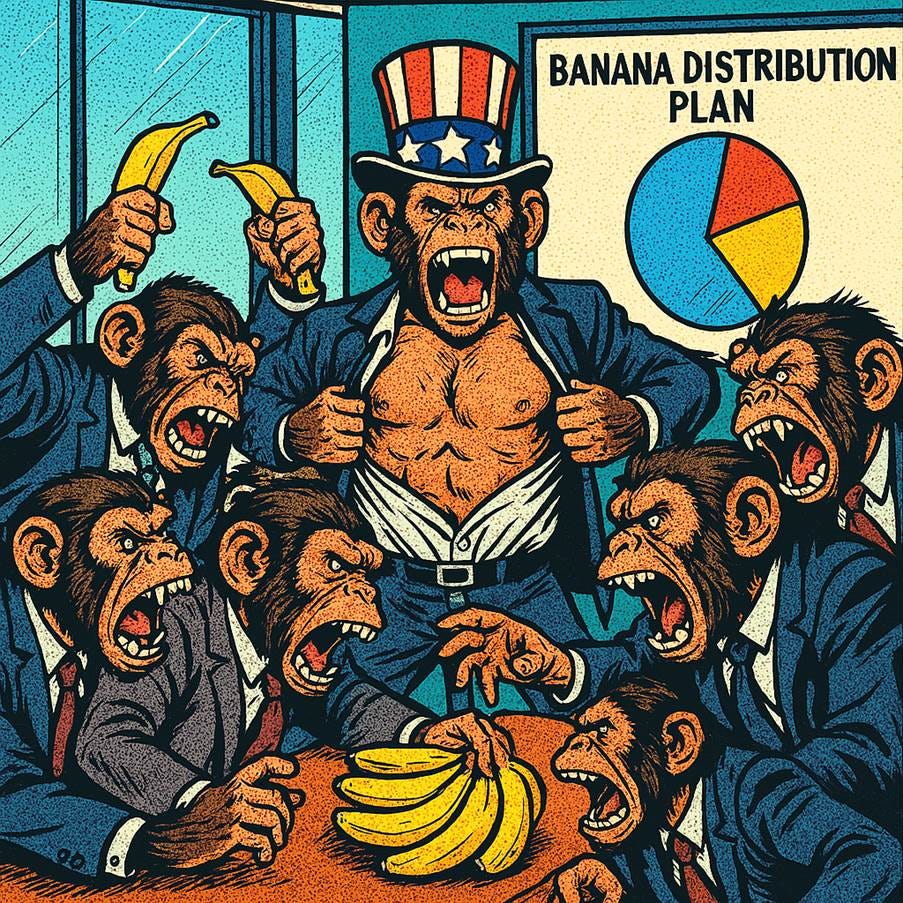
-- Monkey see, monkey want. It’s not going well in the Banana Distribution Plan meeting the United Nations of Monkeys.

A little pretext:
What we currently are witnessing is “The Great Taking”, for lack of a better term. On all fronts, the political posturing across the globe has gone from “everyone mildly irritated at everyone, but still coherent and peacefully trading” to “taking your Bananas, what’re you gonna do about it”.
This happened pretty quickly in the course of circa 2020 to 2025. I believe the lockdown mania during Covid times to be one of the main catalysts with the acceleration of monetary bases through aggressive “QE” programs that turbo-boosted inflation to unbearable levels. And the QE was installed because governments across the globe decided - in lockstep - to send their economies into standstills.
So we all were live witnesses as well as hostages in a grand case of:
Politicians solving problems they created in the first place.
And to be clear: This is a very high level personal account of what I think the world is currently going through – trying to explain the breakneck speed at which old certainties get unraveled and replaced with new, deeper uncertainties on a global scale.
Evolving A Nation
Let’s begin with the beginning, shall we?
Before you have coherence in the world, you usually started with chaos. Tribal structures were our daily life in the “early innings” of our planet. Organization in society, if you will, was small-scale and covered the basic necessities of food, shelter and “security” in a sense that you could feel somewhat safe in your own tribal commune.
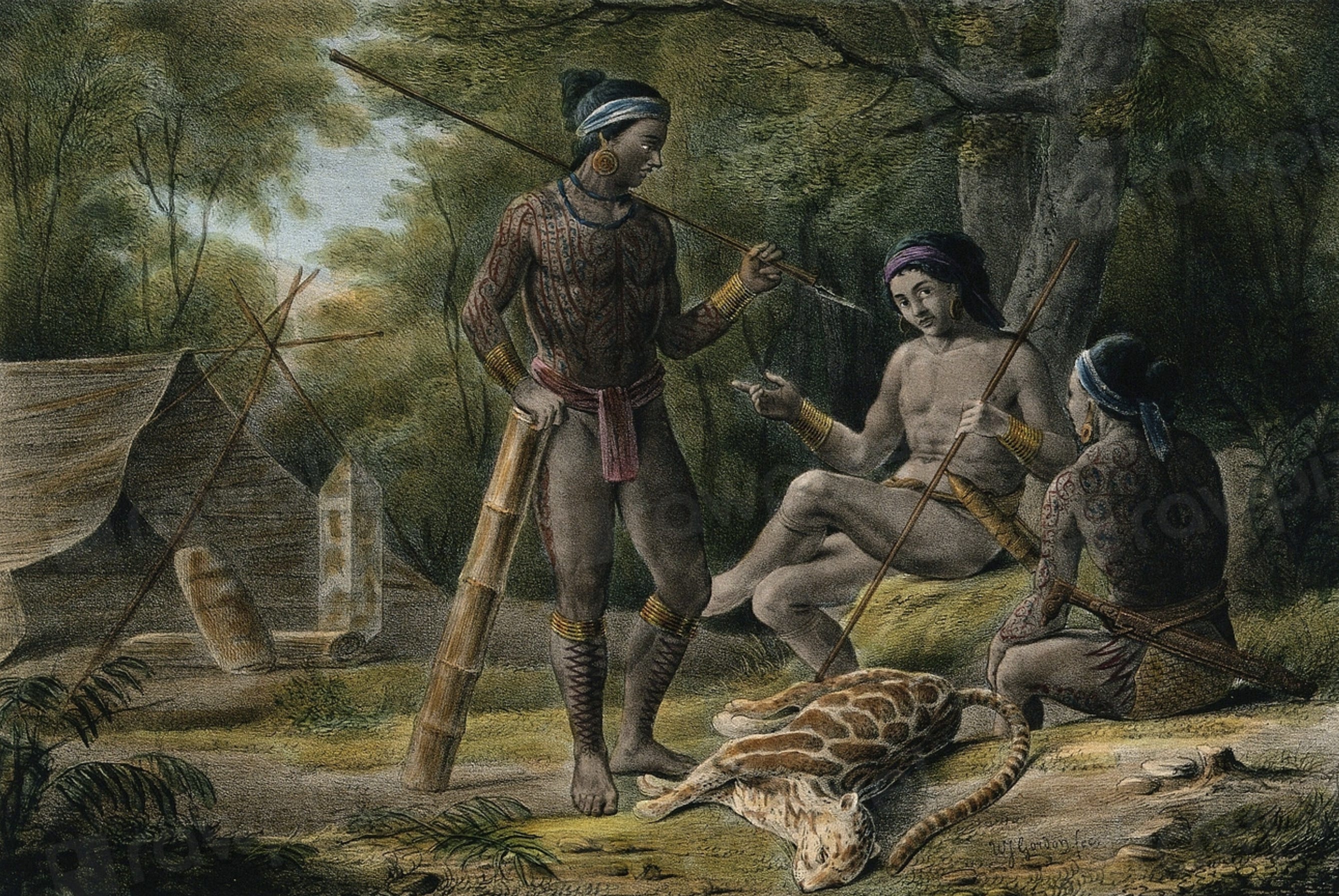
The world literally started off as a dark place. It was fight to survive, take to eat what you could and secure your cavern or settlement from the hairy fools down the next valley.
Since those times, humanity evolved almost fantastically – first climbing down the trees completely, erecting our spines to walk fully upright and finally shedding our fur and ever-so-slowly moving away from the tribal reaction of bashing each other’s brains in when you want something they have but you wanted.
From Dark Ages to Enlightenment
Across a dark, medieval dawn society evolved from solving each and every little personal squabble any “lord” might have had with another not by steel, siege and conquest, with the occasional assassination and murder strewn in, but with an ever-more-evolving system of exchange and trade by money. Wars still exist, of course, as they seem written into our common DNA, but they are used as a “last resort” usually – or of course if you really, really want something some other nation has and you don’t, and feel you could get away with “taking” it the good old way.
Enough literature exists on these developments to skip over them very quickly for the purpose of this little essay, which is:
So why is everyone going bananas?
Let’s explore…


The Big Evolution from Tribes to Trade Society
Humanity has come a long way from “the law of the strongest and fittest”, bashing the other cave dwellers’ brains in to get a juicy Mammoth haunch to an arrangement:
A rules-based system of trade that benefits the many.
Even the “weak nerds” who often turned out to be the smartest & best at business development.
Not sure how the likes of Mark Zuckerberg, Elon Musk, Peter Thiel and all the other “Tech Billionaires” were positioned in High School, but I’d put money on the jocks being able to kick their asses and take their lunch money if they wanted to – I say this without knowing any details and unfairly picking out people that “made it into the public eye”.
This is not to beat on the richest builders of our times who now go to their reunions as literal Billionaire superstars; but to make a point. We moved society away from “beating your ass” into “everyone can do anything if they want and try, and we enable them” – and many took a chance, worked hard and won. With them, the vast majority thrived; but with the law of diminishing returns since circa 1970 the general working population kind of “lost out” on the gains.
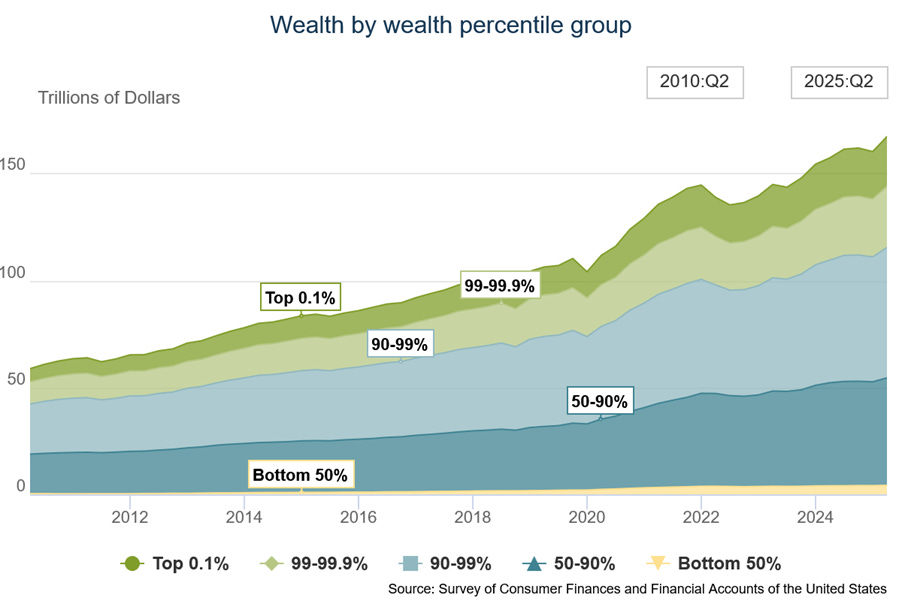
— Chart: FED Board of Governors - live-explore the chart here.
— Additional: FRED has a different version here.
Put differently by fellow substacker Quoth the Raven, this is how the wealth distribution in the U.S. looks combining 0.1% & Top 1%:
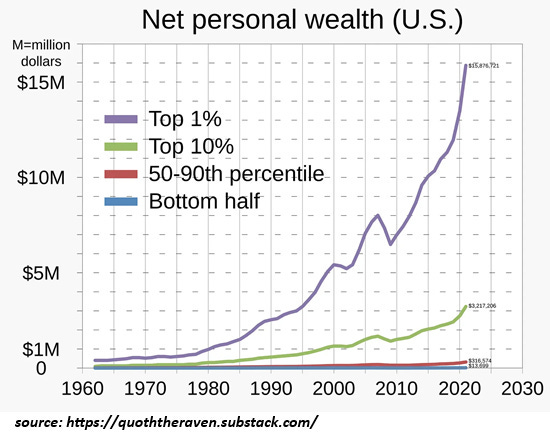
Needless to say, something broke, somewhere. And you can almost put your finger onto the “when”, by looking what happened to money after Nixon defaulted on the US Dollar’s promise to be convertible to Gold at a fixed exchange rate of $35 in 1971. We will look into this in a later part of this series.
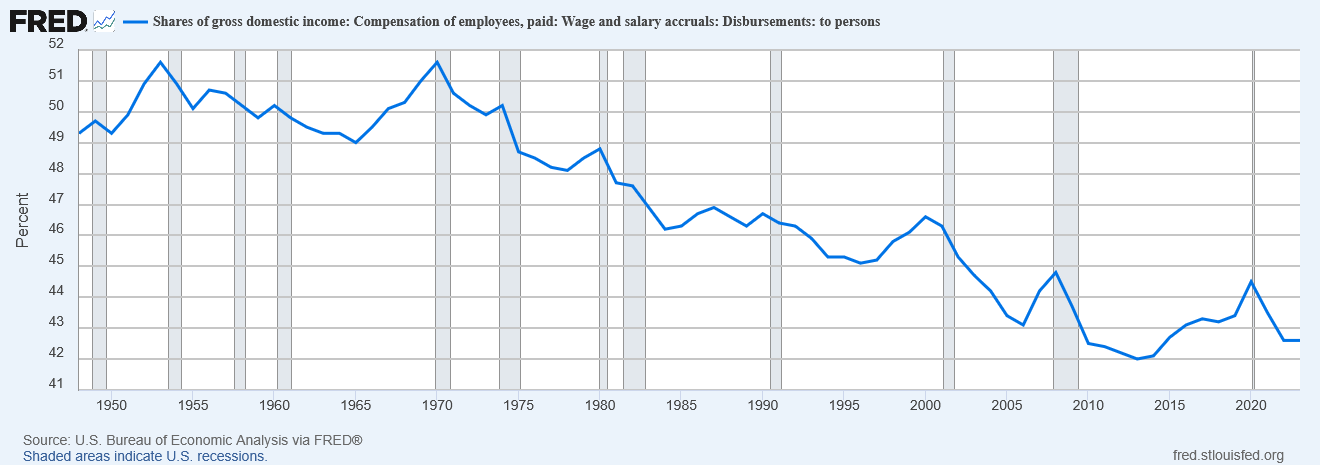
— FRED Graph to live-explore: here.
As to the intricacies of this, it would be enough material for another series where many on the topic of “devaluation of fiat money” already exist.

Let’s zoom out to the macro level of this: Nations.
A lot of nations were built from nothing and are now still thriving on a global scale, despite the odds thrown at them across time either by others or by nature.
Take the Dutch: a poor agriculture-focused society who literally traded themselves out of the Dark Ages to become a world leader with a TOP 20 global GDP and still a thriving, open society. Even more so Germany; built in the middle of a geographical “hot zone” and having fought two devastating wars historically classified “World level”. They arose from the ashes a literal Phoenix a mere 20 years after the end of WW II.
Lumping them together unfairly: Portugal, France, Spain, Italy and Great Britian – all more seafaring nations with a wide reach across the globe still to this day due to their once-entanglement in conquest & conquer in the colonization age together with the Dutch; one of the darker chapters in human history.
What do all these Nations and their people have in common?
They have settled into energy-rich; easy-to-navigate local territories and have built out a certain strength, then expanded their reach, and finally, they turned their strength into an income stream by trade.
In the case of Germany they specialized and refined their engineering to outmaneuver next to everyone on a global scale to simply be the best builders of autos, machines & tools; getting rich by trade and ingenuity rather than rich access to the sea, even though they of course also have that in a limited capacity in the North & East Sea.
Put shortly: most of the current “winner nations” either had all of these or a mix of hard assets:
- Rich, fertile soil in a large part of their country
- Easily navigable local territory (Waterways, Landfares without difficult terrain)
- A good defensible outer geography…
- …and/or trade at peace with their geographic neighbors, instead of “just taking their stuff”
- Energy-rich land – as in direct access to ample oil & gas reserves
- Resource-rich land – as in metals & basic resources by trade or direct access
The general laws of how to get ahead in geopolitics in a nutshell on a geographical level. The more you have of the above, the more you “win” with a massive head start. The less you have, the more you have to compromise or be run over by others who want your stuff.
On these fertile grounds our modern society evolved, over hundreds of years, into the (mostly) “modern western democratic” system we see today.
It wasn’t without hiccups or massive global throwbacks like World War II, but here we are, better than ever.
And this brings us to end of part 1. If you’re up for more, continue to part 2:


Thanks for reading and supporting.

Or share this Substack with others, to brag about your taste in reading:
If you received this post from someone, subscribe to receive all future posts:
