

Monty's Missive #2: May 17, 2026
Of keeping up with inflation, stretching the markets and the two Dire Straits


— A Billionaire Club Trip to China with no real results and markets in thin euphoria, while headlines keep deteriorating. What world to live in!
While the week ending May 8 was closed off by yet another all-time-high in the S&P’s and NASDAQ’s relentless grind higher based on hopium, a lot of great earnings in the semi sector topped with good job reports – one thing never changed: the Strait of Hormuz is effectively closed. Let’s dig in to this week!
Read about:
01 Can you keep up with inflation?
02 How to Stretch a Market
03 A (to-be-expected) Trump Truth: Strait up the Rollercoaster
04 Madness of the AMD Crowds
05 A Roller Coaster, Well Oiled – Oil Markets
06 Germany Continues Economic Downturn
07 Is the AI frenzy just beginning to “stall” or is it rolling over?
08 Don’t be too proud of a SOXX owner…
09 China on the rise, US in decline?
10 Closing thoughts on market breadth as indicator of “future bad returns”
Bonus: Non-Aggression Pact to solve Iran? Multipolar world incoming.

Note: Some email clients might “cut off” some of the content.
Don’t miss out: read the full post by clicking the headline to get all of it.

01 - Can you keep up with inflation?
April 2026 data for inflation came in flaming hot. “Core CPI” is “adjusted” measurement that is cleaned of energy spikes – so if you take into account fuel price spikes it’ll look even worse than this. This chart is prove Jerome Powell’s past “transitory” talk was utterly misleading. Even worse, the Fed’s delayed reaction to years of increased inflation now leaves the incoming Fed chair Kevin Warsh between a rock and a hard place. They initiated an easing cycle and inflation data would point towards increasing rates. This meets historically high stock valuations and a potentially deteriorating labor market leave next to no monetary maneuvering space for the Fed, and it’s worse in Europe for the ECB.
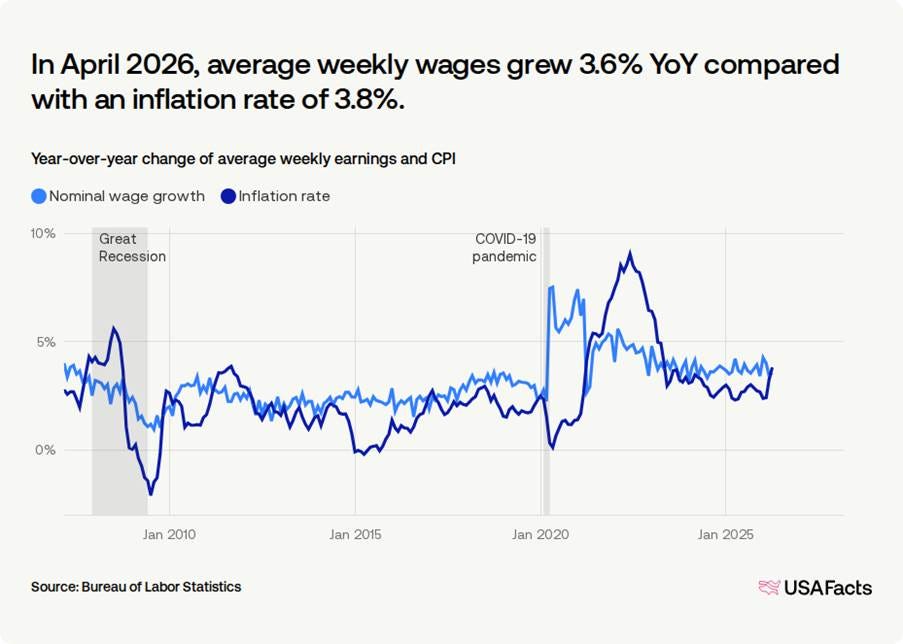
Source: US Facts, based on FRED and BLS wage growth data
The recent spike in inflation takes away all “gains” wage earners on paper have made versus inflation, thanks to the latest “Iran War Spike”, affecting lower income groups hard. This entrenches the dreaded “K-shaped” economy, in which lower income earners pay a disproportionate increase for cost of living, which high wage earners can more easily digest.
02 - How to Stretch a Market
Intelligent markets can suffer from Alzheimer it seems, or at least have a huge blind spot on the matter of a continued Iran conflict and its implications down the line for not only energy but also derivatives like fertilizer, naphtha – with all its end uses – and secondarily inputs like Helium that will affect the very trade that is being hyped right now in a potentially very big way.
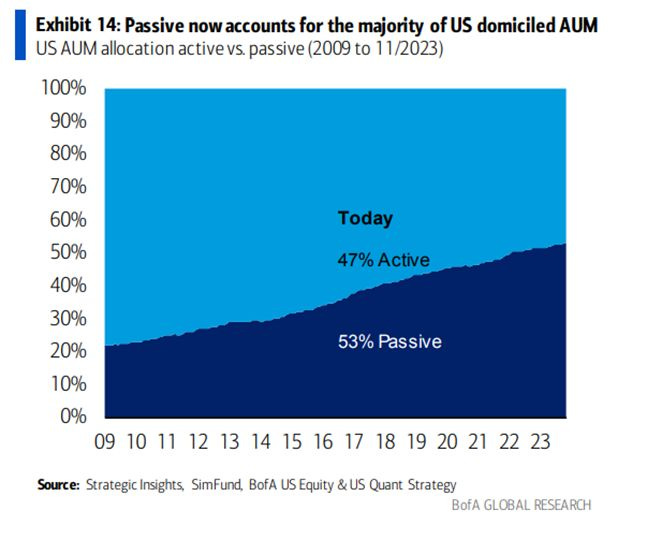
Passive buying is my personal guess on why this market looks “unrelenting”. The ETF “just buy” crowd overtook the active investment crowd in market forces. Some say this negates “markets going down” forever - I call this a fallacy and think that any good old panic will reverse this mechanical melt-up. Probably the fall is not an escalator style - more a cliff dive if history of past “panic sell-offs” are our guide.
Passive AUM in 2023:
Passive AUM in 2026 - up another +6% from 2023:
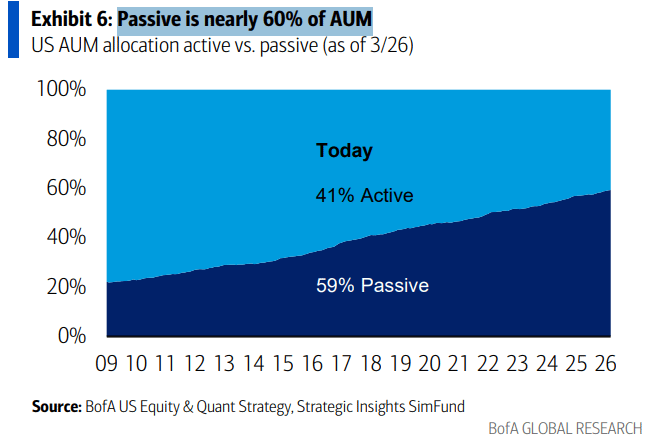
Passive money = blind money that is smug about “constantly investing”.
I’ll get some flak for this from ETF bros and gals. But they won’t deny the fact their passive money doesn’t care about fundamentals or the state of the market and macro.
It cares about being invested, no matter what. Or so the story of passive ETF investing goes.
Here’s a bit of what the hype currently looks like, courtesy of the infinite wisdom of the crowds on X.

But the boring fundamentals never leave. They just take a backstage seat and pop out when no one though there' was still more to the show and everyone’s applauding the supposed main act, harrumphing as they get ignored, until their time comes to be center stage.
But there is one reminder that you should pay attention to the matter, which came promptly before markets opened on Monday with a “Truth” on Sunday.
03 - A (to-be-expected) Trump Truth: Strait up the Rollercoaster
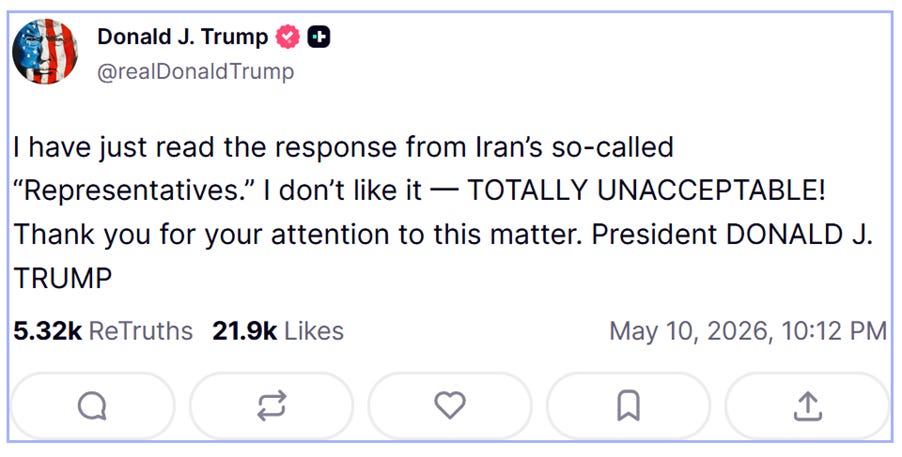
What I find at least “intellectually” hard to swallow is the market’s whipsaw that’s likely to follow the post – yet again – based on trading headlines. But trading based on your intellect, which might be skewed on long-term or macro-oriented thinking, rarely gets you to the right side of the markets. So you’ve got to check your ego at the entrance, proven yet again in the past week.
04 - Madness of the AMD Crowds
I believe the market is now fully in majority control of manic-depressive blow-off tops, driven by high frequency trading, ETF inflow, and a greedy remainder of retail FOMO that seems unrelenting. Someone is buying the rips and the dips. Algos just trade headlines, and they do aggressively so.
And in case there will be a correction, someone will find out they’ve been the patsy – the buyer of $AMD at the 456 level or the one who stayed away from it as far as possible once it detached from gravity:
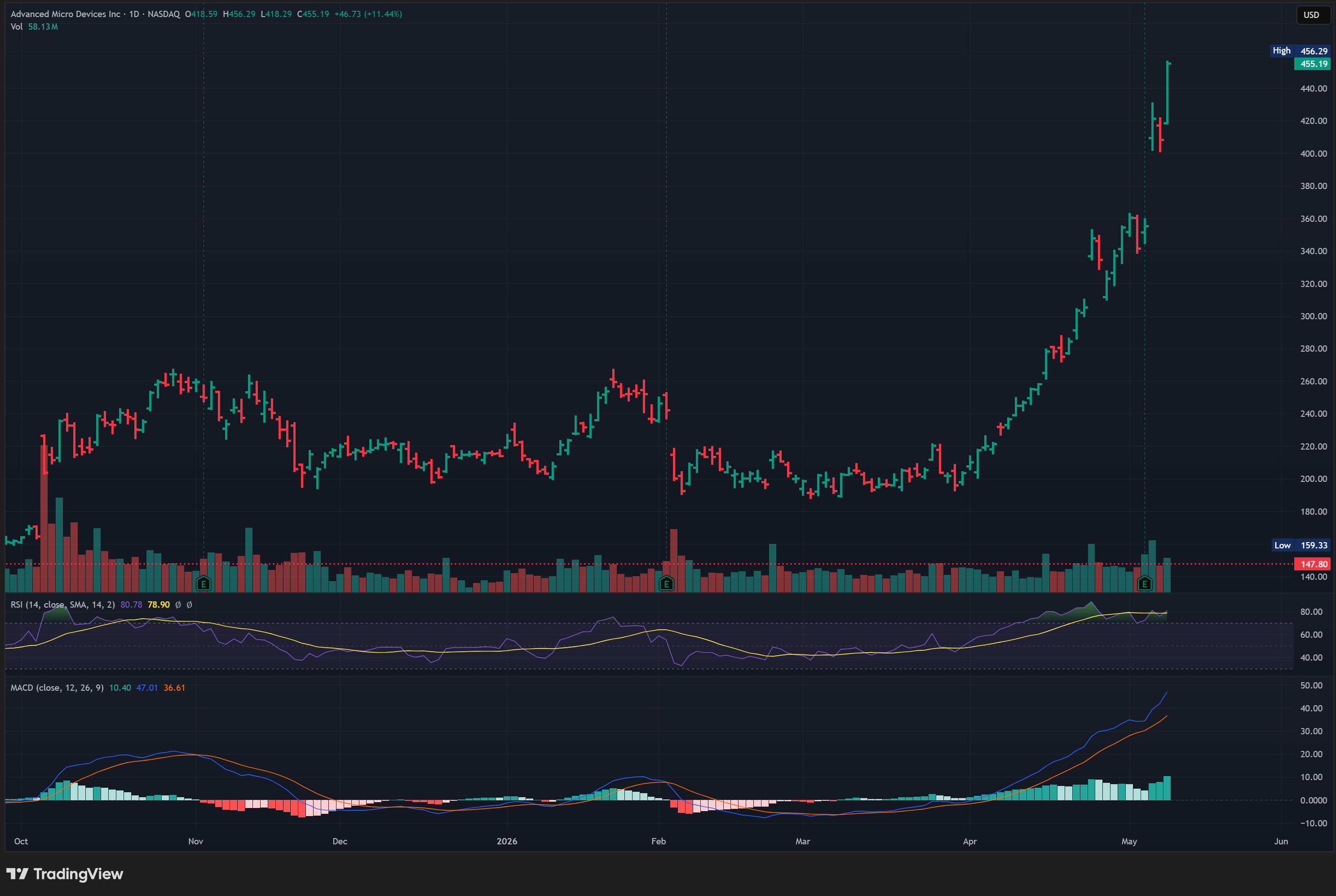
— AMD daily chart, breakout after positive earnings and raised guidance. “Goldilocks” would not even cover it in my view with what’s happening all around us in fundamentals. (May 12 Snapshot)
This is a great future textbook example of how markets detach from reality. I’m either proven wrong by the “grind” going upwards much further from here, some are already posting “AMD 1,000 next” memes. It’s either them getting 2x from here on out, in which case I’d definitely take my wins off the table if I had them, lest they evaporate as quickly as they came. The alternative being “AI” made us finally break age-old market arithmetic and technical valuations can finally be thrown out the window. I’ve never seen a bull run, outside the manic 2000 era that I did not personally trade in for being too young, but watched in amazement as everyone around me went mad for stocks in full-on FOMO mode.
As it stands today: I’d watch for the last bear to capitulate and throw their lot in with the mad crowds since they must be the mad ones and finally the market broke their resolve.
That is the point at which I’d put on shorts. But not for going to the beach.

Share this with anyone who thinks Oil is going up, down, or sideways.

05 - A Roller Coaster, Well Oiled – Oil Markets
And it’s not only tech that trades purely on headlines. One could spot the same behavioral trading in oil – Brent is the “contested and congested” crude type that, thanks to the closure of the Strait of Hormuz and next to no tankers traversing the Persian Gulf safe a few “friendlies” of Iran and the two tankers the US Navy escorted to much fanfare through the short-lived “Project Freedom”, an initiative that lived and died within 48 hours.
I use a Brent cash spot chart to illustrate the roller coaster I mentioned:
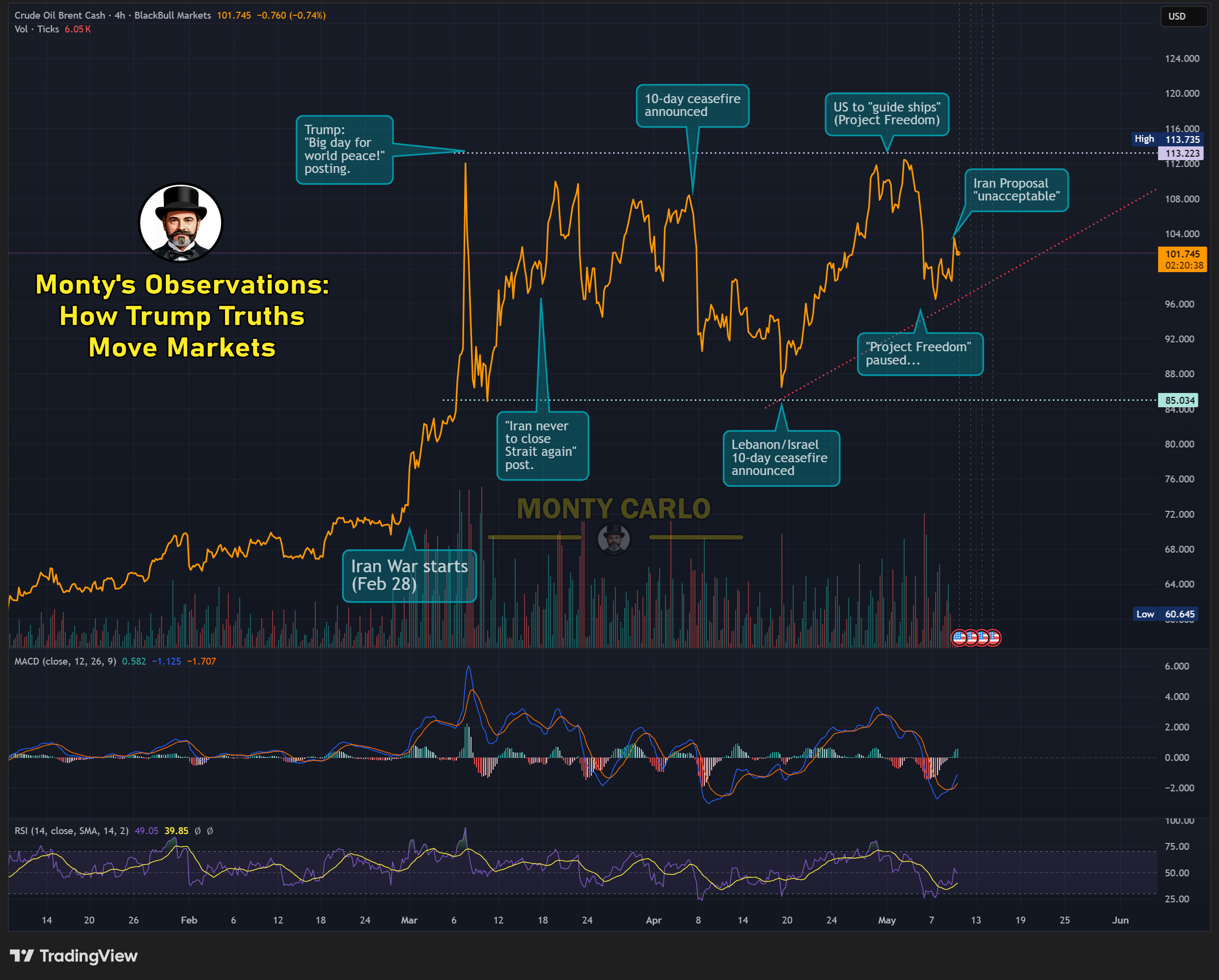
— Brent oil spot chart, annotated by author with “major events” in headlines (Snapshot: May 12)
You can see how volatile energy traders acted, probably out of necessity of securing oil deliveries, and how crazy volatile oil has been ever since the Hormuz conflict started on February 28th.
Note that I am not an energy trader, so I can just view this from a general trading lens, and even viewed through that it doesn’t look great. Energy markets have their own dynamics, since the physical barrels are an actual necessity – as laid out in last week’s comment on crude distilling. If you need to refine 2 million barrels to not have your refinery go cold, you just need 2 million barrels delivered daily, weekly, monthly, whatever your refining capacity is.
That is the physical necessity. I am sure refineries and downstream participants have futures secured for the year out since to them it’s vital the stream of oil does not rupture. And then there’s the speculative side of the trade – future traders trying to arbitrage/price-gouge the other side because they are “smarter” than the ones needing the actual barrels, I presume.
An unknown amount of algo trading is certainly going to try to arb trade the whole cascade of headlines.
And this is how we get fickle volatility in oil markets that’s just seemingly headlines pushing the price ticker in high volatility but potentially low volume days.
If you are set for the long term, my best guess is: oil’s not going to pre-Hormuz levels – while it might certainly be traded to below Feb 28 levels in the short volatility and positioning – the long-term mindset and macro tell me:
We’re currently facing the second, global “energy repositioning” event ever since the 1973 Oil Shock. I’m still sure the globe is facing an oncoming recession of some magnitude - either global or restricted to regions like Europe and parts of Asia - not a forecast, just a thought. This is also based on the writings of Alyosha on Substack with rising inventories, which is the conundrum we’re currently facing in short-term oil trading, despite a full-on closure of tanker travel, pipelines are filling a part of the short-term gap but then there’s also demand destruction and rising inventories in some places - so the global tally stands higher even despite crude barrels missing:
I guess it’s a tug of war in-between energy trading realities and future imbalances potentially – energy markets are messy and headline-driven.
And then, there’s this Defy the Odds’ framework, which is closer to what I believe to be the longer-term outcome of Hormuz:
The confused oil picture of futures trading vs. long-term physical implications make me think there’s going to be pain even if current net inventories are looking OK and rising. If Hormuz stays “contested” I think we’re in for a hard winter in Europe, while the US is isolated, with Asia scrambling for energy from US as likely oil & gas sales beneficiary.
But it’s not only oil - important “side products” might take center stage soon:
Sulfuric Acid
Naphtha
Helium
Then, there’s also a “byproduct” that many forget - Naphtha, utilized in so many products, it literally can hurt your head if pharma runs out of the stuff coming out of a recent article by The Brawl Street Journal:

Literally giving me headaches, so I am stocking up on Aspirin before it runs out.
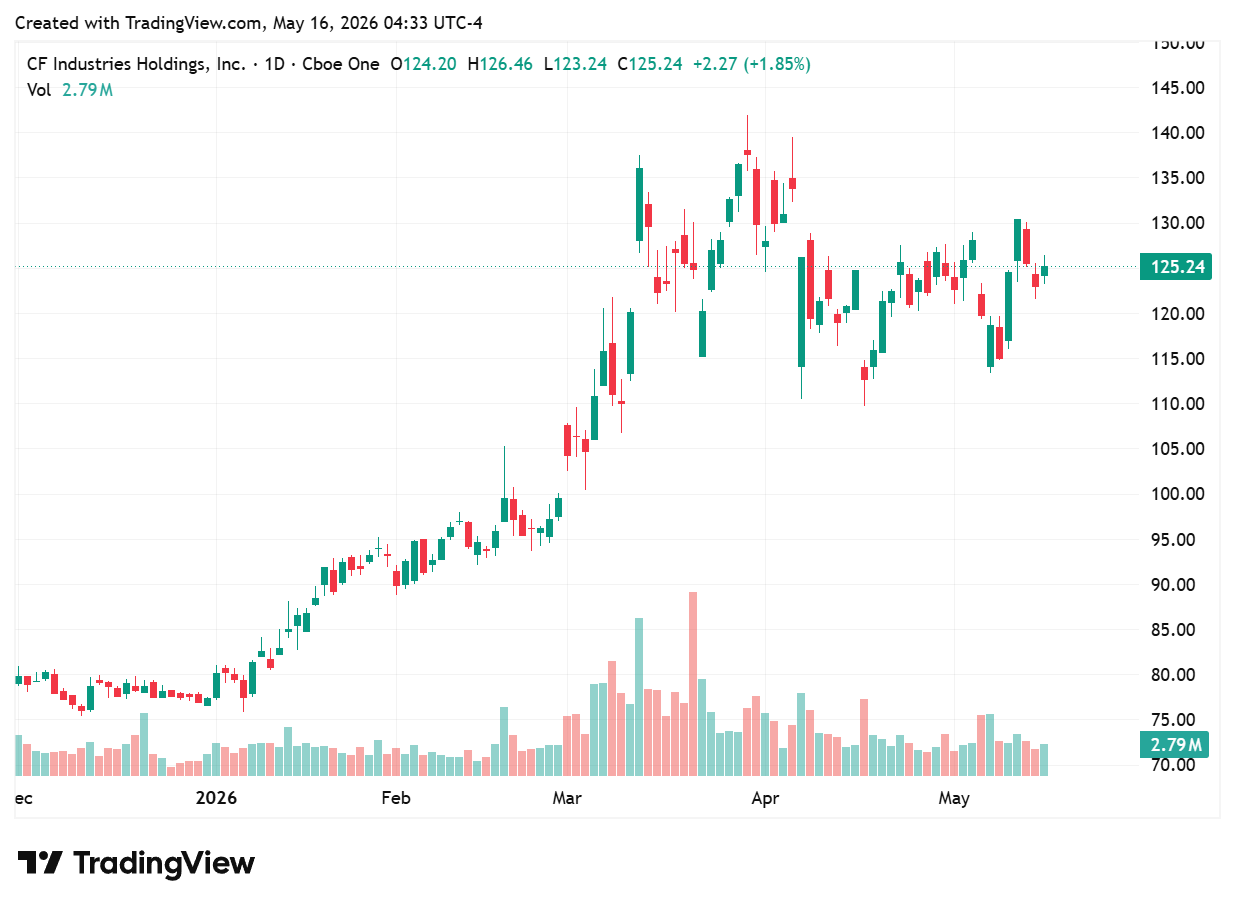
Fertilizers are in a congested supply scenario right now. But: The market isn’t “pricing in” anything further out in the “order chain” besides an immediate reaction of driving up CF Industries:
…and Nutrien:
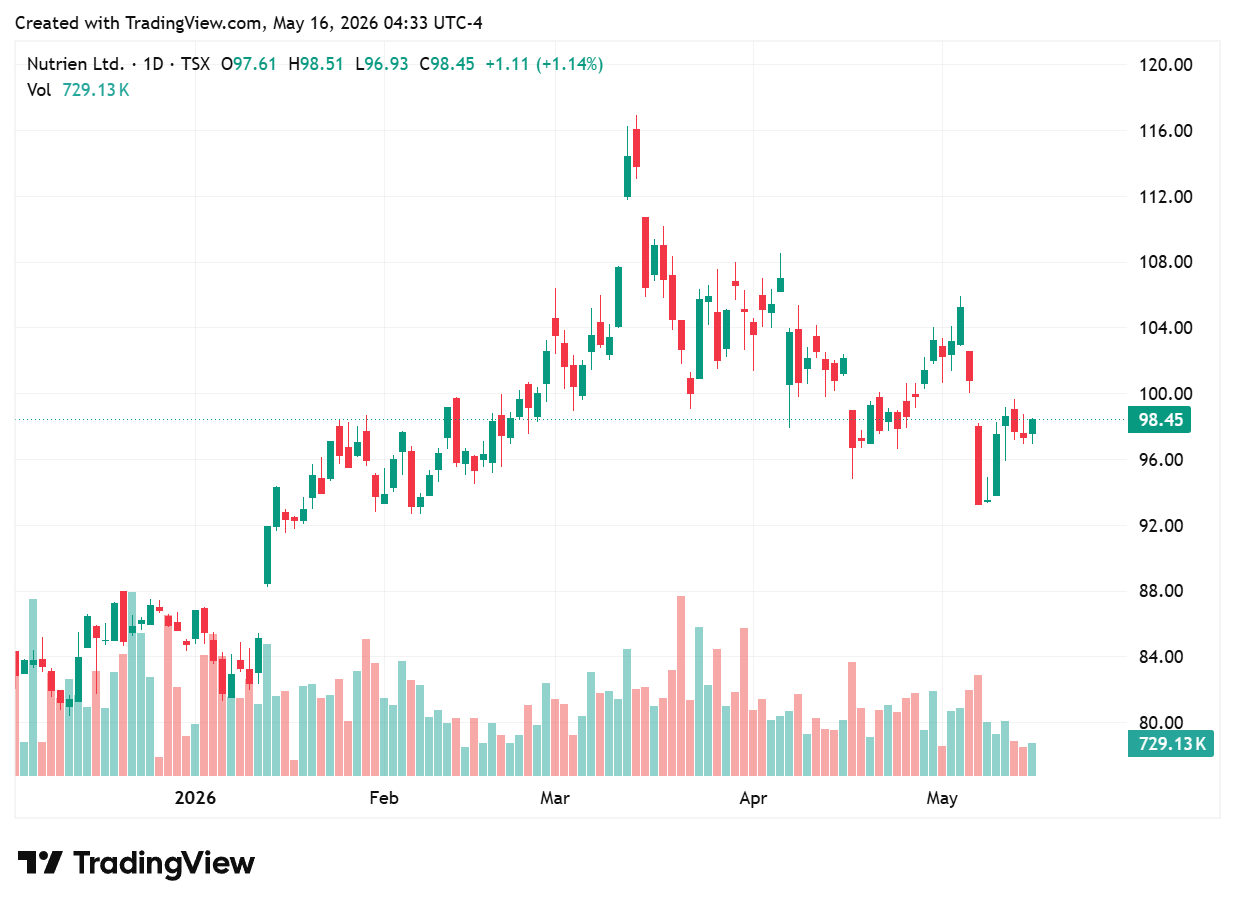
… who are isolated because they have integrated supply chains and can “weather the storm”. This is just first order thinking. The market does never care about second order and further out until it hits headlines.
NTR and CF are the two main providers of Urea / Nitrogen fertilizer supply on the western and northern seaboards. What about Asia, Europe and APAC? Well, Russia already has curtailed their supply a while ago and in Europe as you know there’s a lack of natural gas, the main feedstock of local fertilizer production. It’s going to be “tricky” as the British would probably call it when feces fertilizer hits the giant windmill of feedstock and sulfuric acid scarcity.
The US seems insulated, also on that front thanks to their abundance of feedstock for fertilizer.
The whole situation is going to be messy for sure. Short-term market headlines and long positions unwinding based on shortsightedness might indicate a great chance for energy names and some fertilizer names depending on your risk appetite. This is not supposed to be financial advise - for that this would be way too short a paragraph. Just food for thought.
Counterintuitively to many observers outside of it, Europe’s core economy is struggling for years now and the signs of a deep recession keep mounting:
06 - Germany Continues Economic Downturn
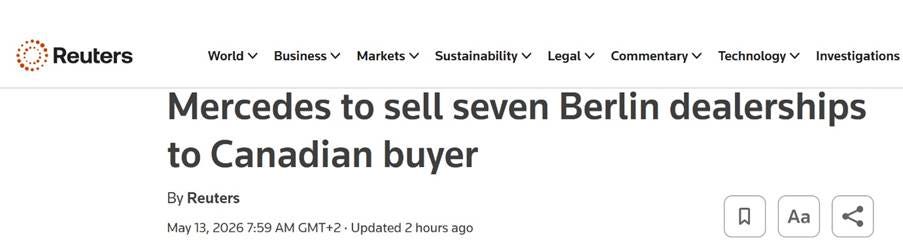
Mercedes is one of the “dream brands” of Germany’s automobile-centered economy – that may be a thing of the past, as its star is waning rapidly on the local front.
It seems you can’t sell any of its expensive limousines that well anymore profitably, judging by the automaker’s pull-away from the whole Berlin/Brandenburg area?
This impacts 1,800 employees reportedly on top of one of the “Made in Germany” legendary brands now not owing direct dealerships outside any remaining independent/franchised ones.
It’s a sign of the “Green Deal” dream coming to fruition, finally, with energy costs untenable for most industries and that also hits the consumer hard. The decision to effectively make internal combustion “verboten” by 2035 - part of the EU’s odyssean strife to “save the climate” in an ill-begotten Green Deal – has literally driven Mercedes selling cars untenable in Germany’s political headquarters, it seems.
Its stock has had a volatile trading pattern across cycles – but closing dealerships in Germany might be a contrarian signal after all – since it’s losing its profitability ballast while concentrating on greener shores inside continental US.
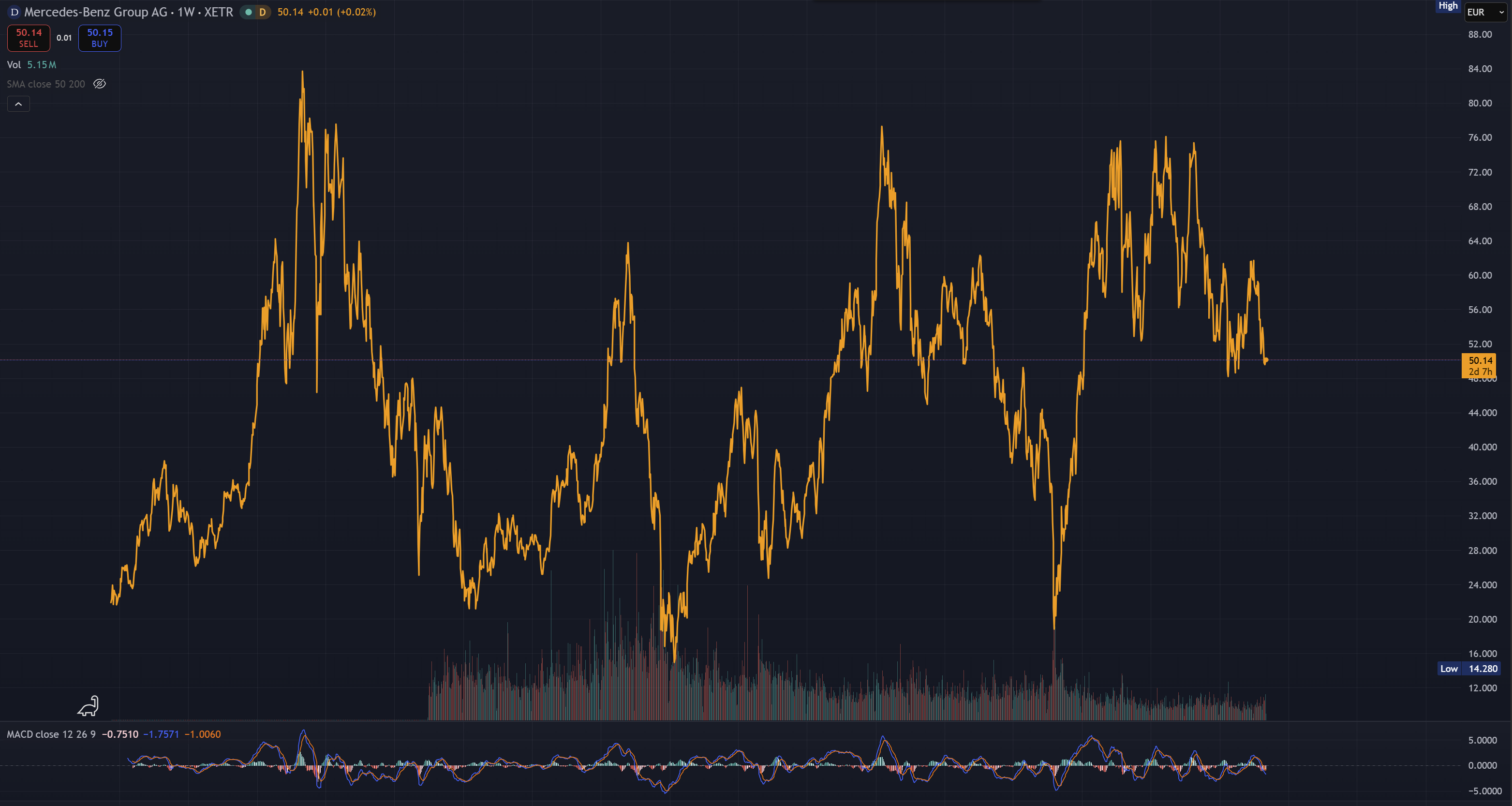
— Mercedes Benz (MBG), all-time-chart, weekly (TradingView)
Another of its fallen auto leaders, Volkswagen, has severe revenue troubles, and is trading at its lows while Mercedes seems to have not invoked investor’s wrath yet…
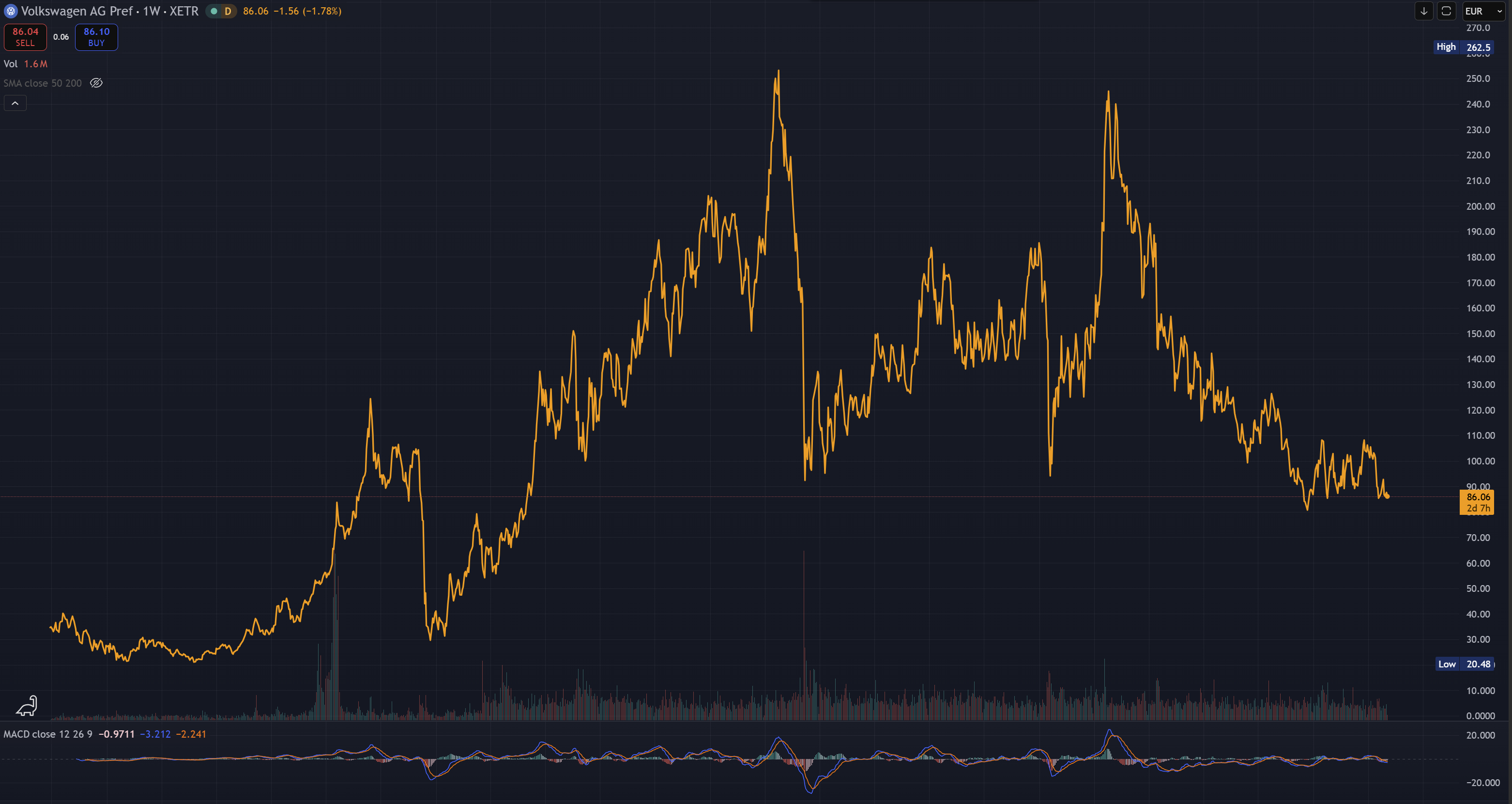
— VOW3 chart (native ticker), weekly, all-time – trading at multi-decade lows.
Carmakers in the doldrums – for Germany’s Berlin Politburo this should be poetic justice and they should probably hang their heads in shame, if nothing else.
If they still know what shame is at this point.
And their holy transition grail also only worked as long as the tax payer helped the wealthy get those overpriced EVs & Electric SUVs they need to comfortably roll to get their kids to schools for the few kilometers those things reliably can drive.
Others are not going for the bait, according to 2025 figures - German EV sales crashed in the first year without subsidies… I guess EVs aren’t as attractive if you don’t get tax funding?
Guess it’s soon back to horses again, here’s an idea from Germany’s infamous “public broadcasting network”, funded by mandatory payments from every households, seemingly, to be delivered some great (maybe prescient?) reporting:
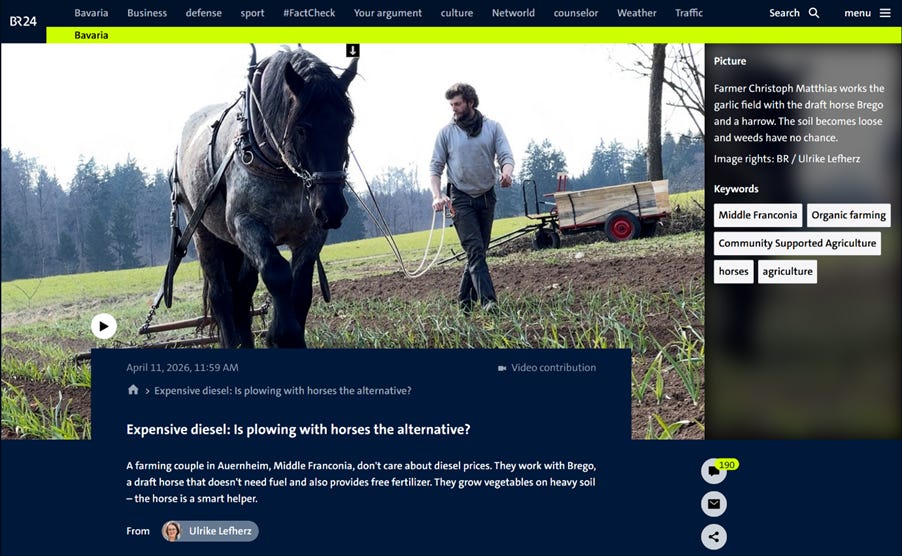
Speaking of not needing something, maybe the world also doesn’t need that many data centers?
07 - Is the AI frenzy just beginning to “stall” or is it rolling over?
It seems by now that everyone and their uncle is heavily “all-in” on semiconductors and memory stocks which have experienced one of the craziest “blow-off” rallies witnessed in the overall sector since 1998-1999.
And we might just have seen a glimpse to the end of the unrelenting pressure upwards, by the SOXX having a bad hair day on Tuesday, May 12. One day does not confirm anything, of course and a lot of traders are getting antsy looking at a potential run-up of hundreds of percentage points on paper depending on entry levels.
I watch the SOXX, which is based on the Philadelphia Semiconductor (SOX) Index, so a good proxy to watch for the whole sector just in case it does roll over.
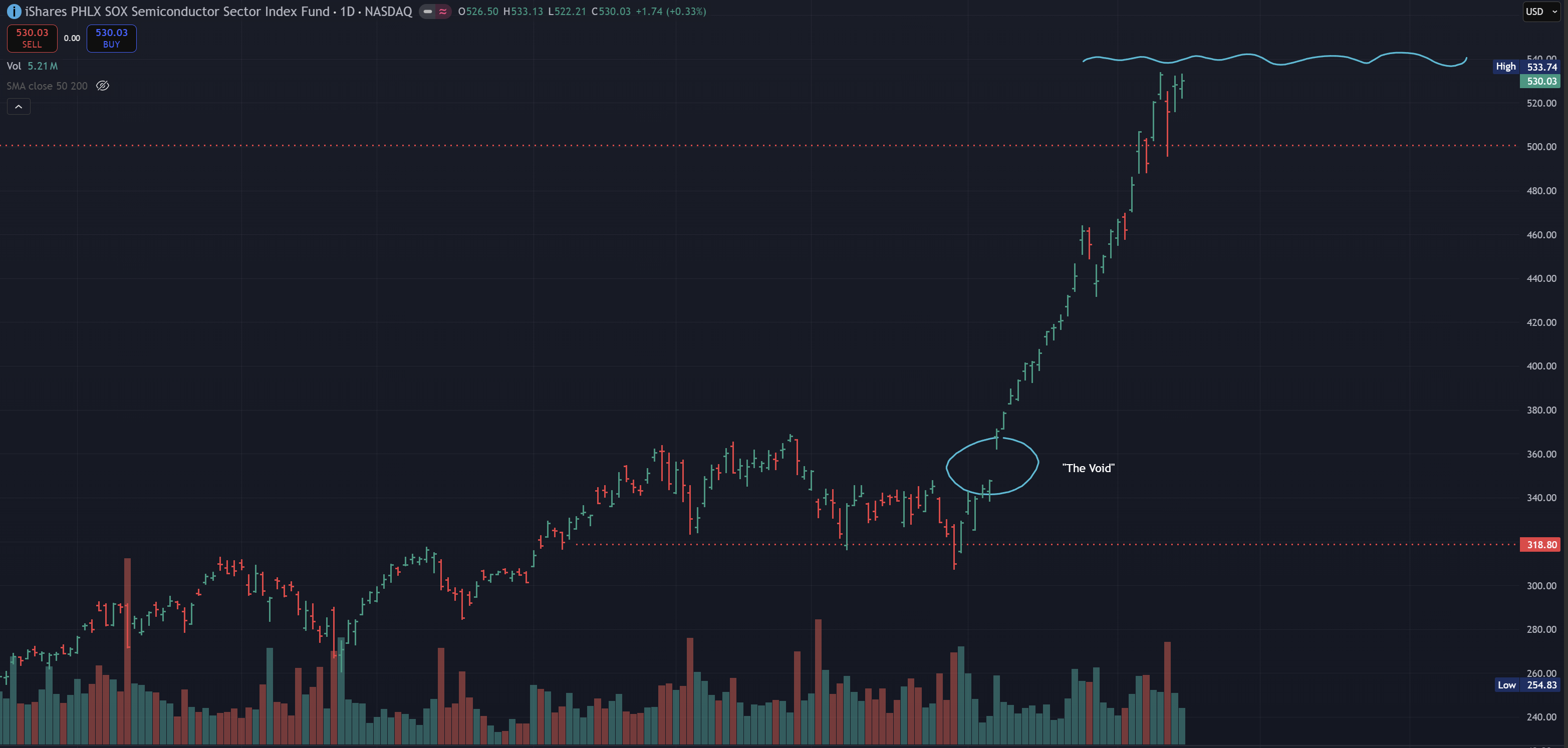
— A little technical picture of the iShares SOXX, with a technical void marked in gap-up pricing.
I made a small illustration for all proud owners.
08 - Don’t be too proud of a SOXX owner…

09 - China on the rise, US in decline?
This week, Trump flew himself and a few Billionaires to China to make a “deal” and see how his tariff posturing has fared ever since he started that particular part of the trade war.
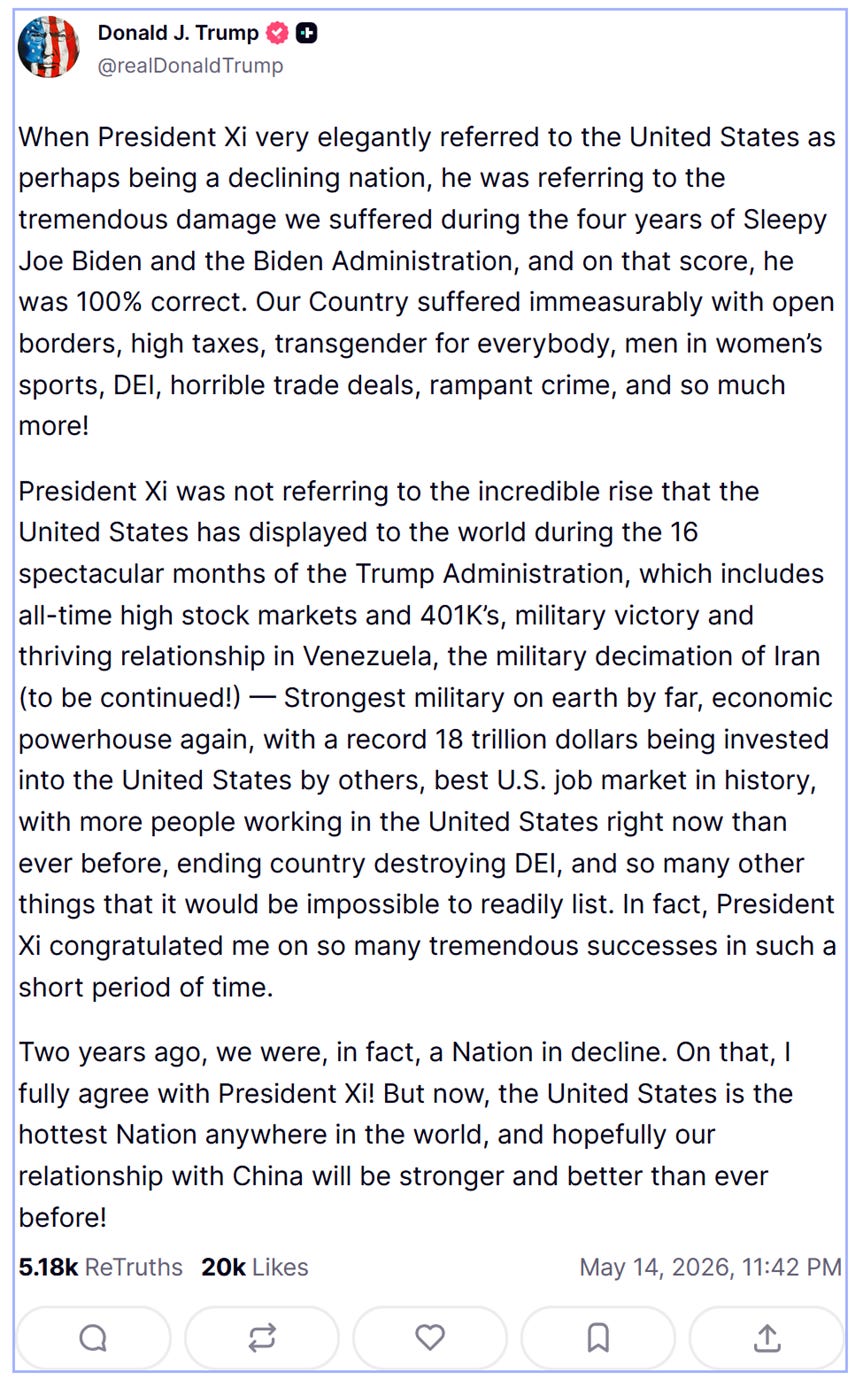
Source: Truth Social
In a nutshell: decline confirmed, but it wasn’t his fault, and now it’s going to be all good again.
With tariffs, there’s a physical component to keeping China happy, too:
Hormuz is not the only contested shipping lane out there. Chinese waters have the Taiwan Strait as an energy chokepoint and the concern is that similar to Iran this can be used to control who passes and who doesn’t sell their goods into Greater China – as proven throughout time via several tense moments in the Strait.
There’s a vested interest for Japan, China, Korea and obviously Taiwan itself to keep shipping lanes open and uncontested to allow free, unrestricted trade.
In the past, the Chinese People’s Liberation Army (PLA) conducted military exercises in or near the Strait, which was a clear demonstration of force – and a reminder that trade interruption is an option at all times.
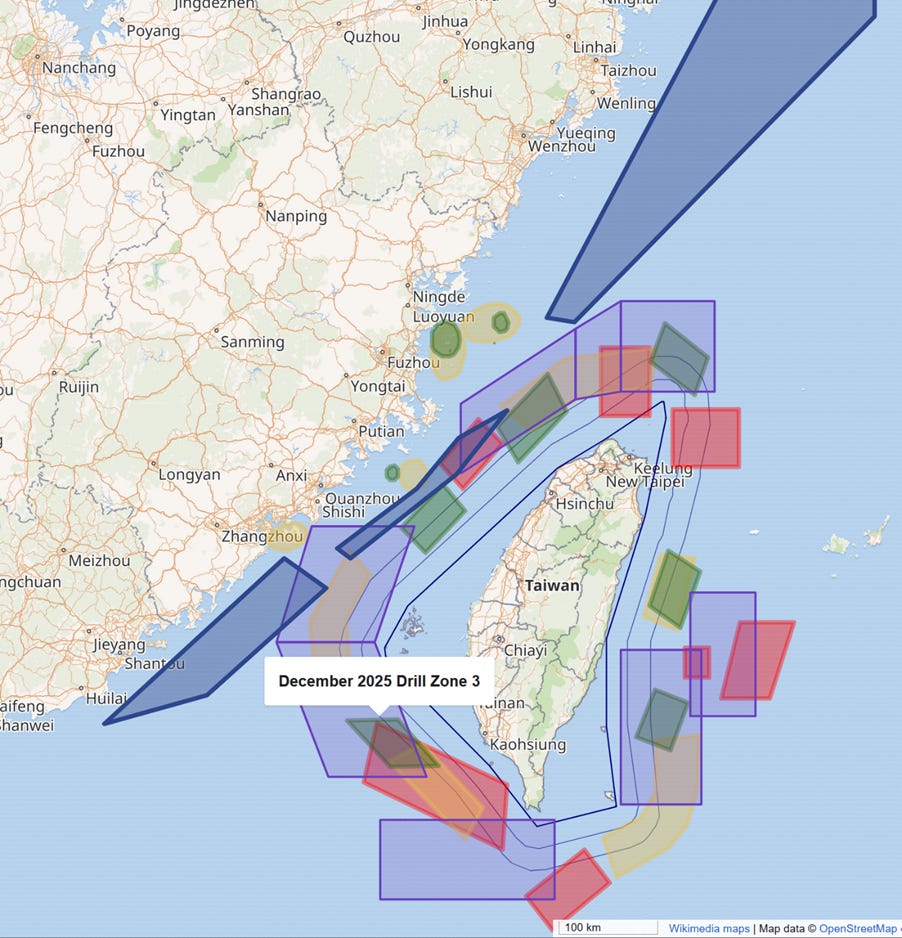
Source: Taiwan Strait Crises / marked Drill zones over the years by PLA – OpenStreetMap, annotated
Taiwan is one of the main hubs for semiconductors production and design, so there’s a direct implication and huge leverage if shipping is interrupted even to the coveted “AI trade”.
Which is the reason that the US administration needs to get on China’s “good side” to prevent any escalation. Xi did not mince words, it seems.
There’s a constant sword dangling over everyone’s heads – and a huge bargaining chip (not a semiconductor) to lighten the US tariff levy on Chinese goods.
10 - Closing thoughts on market breadth as indicator of “future bad returns”
The week was marred by an uneasy up-and-down in markets – as if no one knew what direction to position in. I think unless both Hormuz and Taiwan Strait are gone weighing on markets or if there’s a material change in tensions to any side we’re not going to see clarity emerge. Oil is traded on headlines; there’s material long positions in futures when inventories seem to rise due to demand destruction (per @Alyosha, who is a great follow on Substack) - but there’s also diverging signals and long-term supply disruptions of inputs per @HFI Trading and @Defy the Odds work. Personally I don’t think Oil is going to suddenly go out of favor, but if oil demand destruction, unclarity of resolutions in the Straits, long term implications of supply interruptions as well as economic indications keep the confusion up with mixed signals I don’t think these market valuations are holding . Inflation: up for years above 2% “Fed target”; US employment: no problems; markets: no worries; yet bifurcated consumer spends; worsening situation in Europe’s top economy etc.
Market breadth looks weak, indicating only the heavyweights carry the index. A bad “advance to decline” ratio that abysmal under the hood while we’re seeing daily new “all-time-highs” does not instill confidence in me that this is a “high-conviction market” as it was a year ago in semis. But: this also does not forecast a “top”, it’s just a signal that bears noticing.
I’ve never seen a mix of these conflicting indicators while markets rose on what looks to be “technical melt-up” on synthetic trading. To go in a new long on semis now needs a serious set of convictions at these price levels with SOXX indicating a contentious “indecisiveness” at what looks to me like a toppy wobble - not a technical term, sorry chart analysts.
I’d be amazed if we don’t see a mid-term correction in semis – unless there’s a goldilocks resolution to all the above – in which case the market would probably continue unabated until some other gigantic roadblock appears.
We’ll take it one at a time, please.
Bonus - Saudis float a “non-aggression pact” in the Gulf
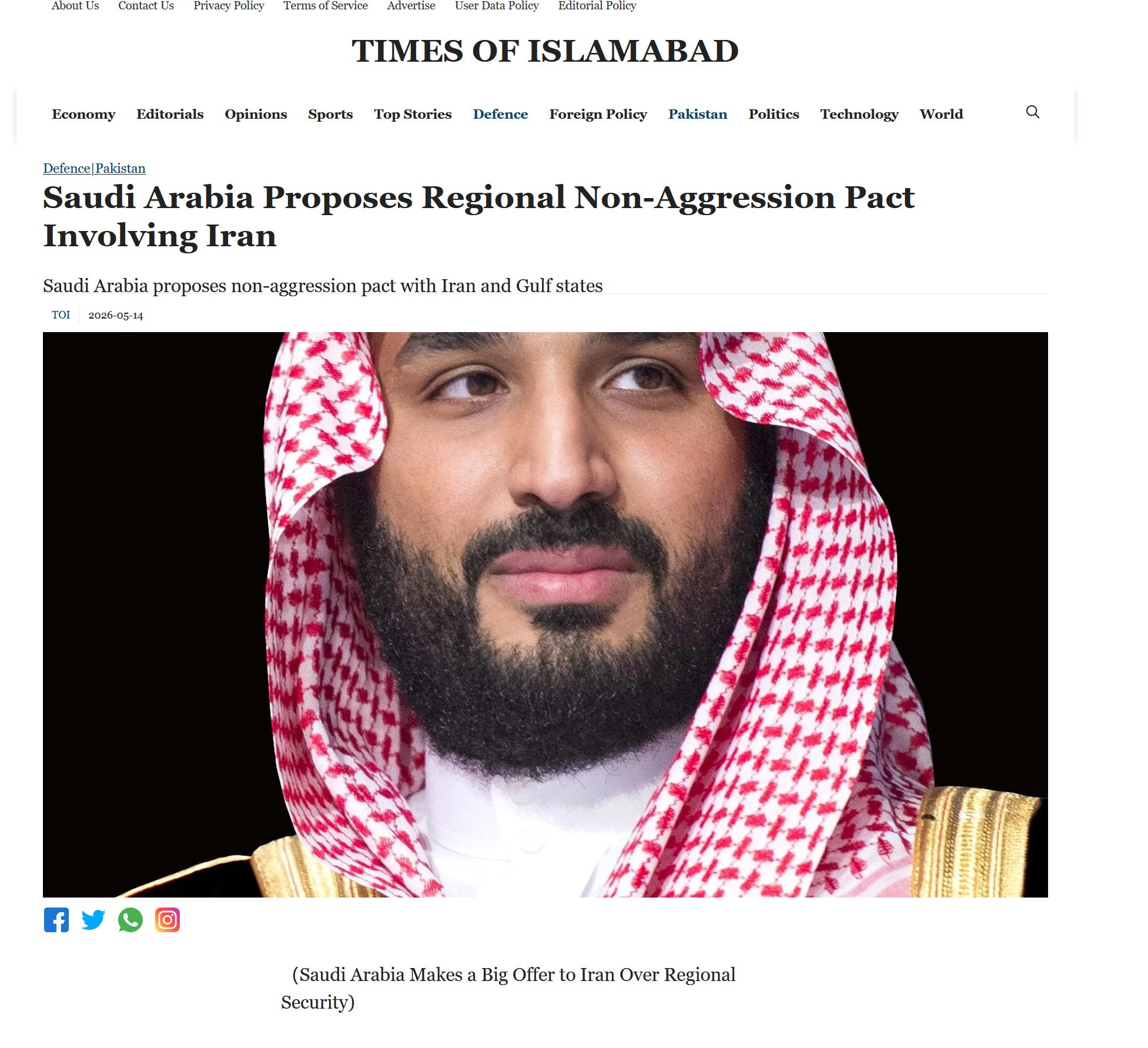
Modeled after a cold war era idea, born in Helsinki, the Saudis have floated the idea of a “non-aggression pact” to ease tensions and return to (some kind of) normalcy in the region.
The Helsinki accords, signed in 1975 by the US, European countries and the Soviet Union and its allies, sought to address security issues and foster greater economic co-operation between rival powers.
—Financial Times, May 14.
This is a pointer to the world after the US leaves as the hegemonic force in the region - and Europe has to fend for its own energy needs and get along with them, somehow. If this works, we’ll face a different security architecture with a likely high price tag on oil & gas - to pay for that guarantee they generously propose.
That’s one more radar blip pointing to a multipolar world after 80 years of relative peace and global harmony after World War II, Bretton Woods and its follower, the Petrodollar looks about to be sailing slowly towards the sunset as the only way to settle energy trades.
Source: FT (Originator) / Times of Islamabad & many more.

Good all around assessment. Thanks.